
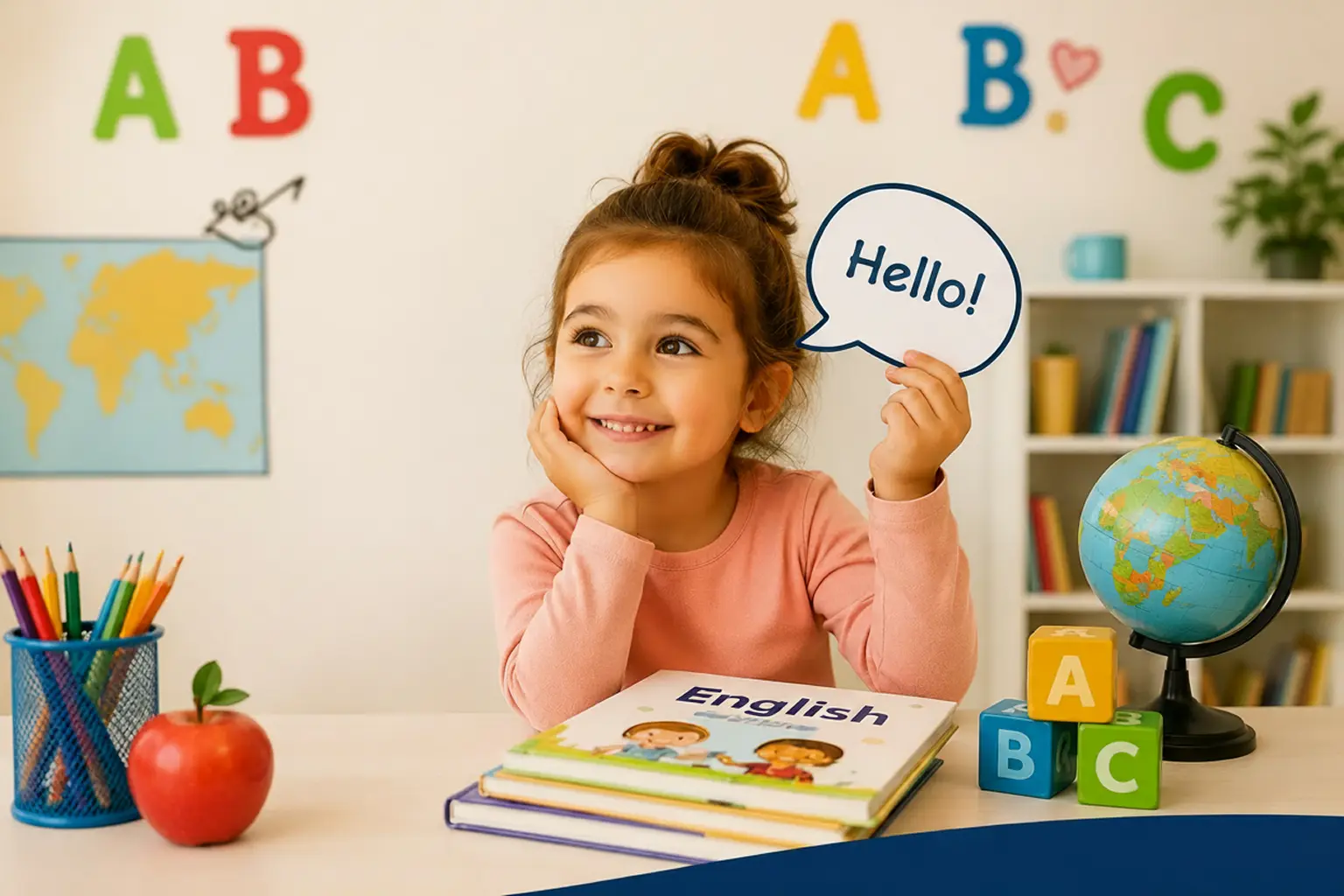
When it comes to teaching kids a second language, one of the most frequently asked questions by parents is: "When should we start learning English?" The vast majority of experts answer this with, "The earlier, the better." But why?
Sharing her insights as part of the Flalingo Parent Guide, Psychological Counsellor Gülsüm explains the miraculous effects of early English learning on brain development.
"Thinking in English" Starts at an Early Age
When adults learn a foreign language, they usually think in their native language first, and then try to translate that sentence into English in their minds. This is one of the biggest obstacles to speaking fluently. However, for kids who learn a language at an early age, the process is much more natural.
"Since kids haven't fully learned the patterns of their native language yet, adding English alongside it shapes their brains to think directly in English."
— Psychological Counselor Gülsüm Özışık
Because kids haven't completely internalized the grammar rules and boundaries of their mother tongue yet, their minds are highly flexible. When they are introduced to English structures during this period, they learn English without "translating" it, thinking directly in that language—just like they naturally picked up their first language. This lays the foundation for them to speak with native-level fluency in the future.
Ages 3-5: The Golden Era and Brain Development
The most critical advantage of early language education is related to neurology, specifically brain development. The ages between 3 and 5 represent the period in human life when the brain develops the fastest and is most open to learning.
What Happens Between Ages 0-6?
As Psychological Counselor Gülsüm points out, synaptic connections in the brain form at a tremendous speed during these years. Kids absorb stimuli from their environment like a sponge. When a kid is exposed to English during this time, their brain saves this new language into long-term memory much faster and more strongly.
Conclusion: A Lasting and Natural Language Journey
English education started at an early age stops being just a "school subject" where a kid struggles with endless rules in their later years. Thanks to the rapid brain development and flexibility offered between the ages of 3 and 6, English settles into a kid's mind in the most natural, permanent, and native-like way. Providing your kid with the right English exposure during this early stage is one of the most lasting gifts you can give them.